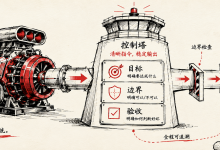
This article explores three core challenges in Prompt Engineering: first, conflicts between new and old instructions leading to missing JSON fields in model outputs, where new constraints cause models to ignore original soft requirements; second, the risk of negative optimization during the process, such as reduced fields or watered-down descriptions, necessitating automated regression testing to ensure output quality; third, poor cross-model consistency, where the same prompt drops different fields across various models, requiring universal techniques to stabilize core structures. Based on practical experience, the author shares anti-degradation strategies, emphasizing the importance of automated testing and structure fixation. These insights are highly valuable for AI developers and prompt engineers, helping to improve the stability and reliability of model outputs and advancing the optimization of Prompt Engineering practices.